SandBar Callus Care has formed a promotional partnership to enhance awareness of their products. In a detailed discussion with RyLee Reid, founder and CEO of SandBar Callus Care, insights were shared about the company’s mission and the innovative approaches they employ.

The SandBar difference: A better approach to callus care
By RyLee Reid, SandBar Callus Care Founder & CEO
What initiated the creation of SandBar Callus Care?
SandBar originated when I began my journey in CrossFit, where I frequently injured my hands while performing gymnastics movements on the bar. I distinctly remember feeling a sense of pride when I developed my first calluses—they were a testament to my hard work. However, I was puzzled by the fact that these protective calluses would often tear off, leaving me to wonder why my body’s natural defense was becoming a hindrance.
I searched extensively for a remedy, consulting individuals around me, but most responses were resigned to the idea that hand injuries were just part of the experience. This was not acceptable to me.
Then, one day I injured my hands to such an extent that I was left with curled, bloody fingers, as I could barely open them due to pain. That moment was transformative; I realized I had been incorrectly filing my calluses.
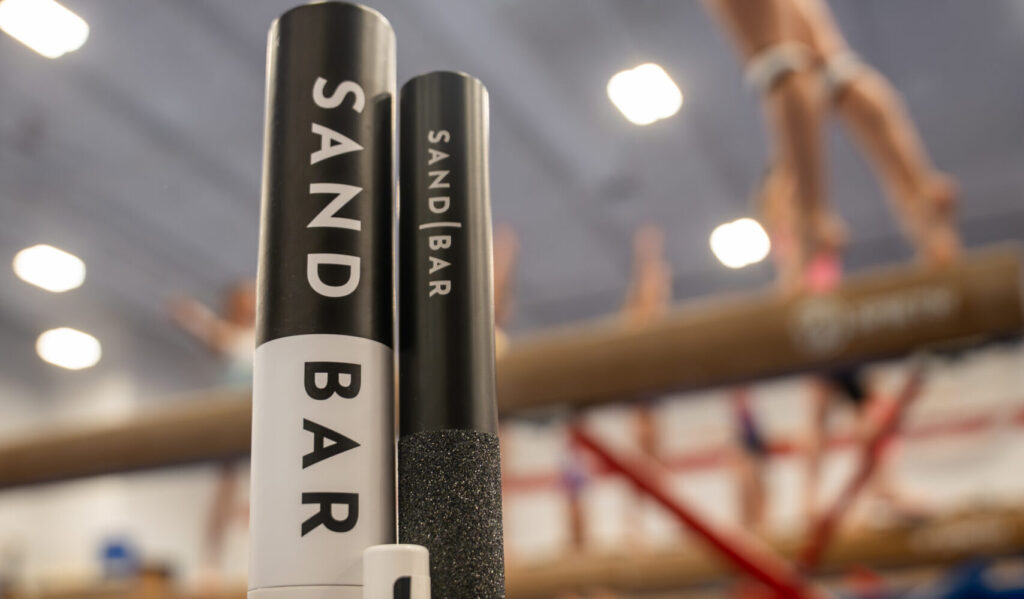
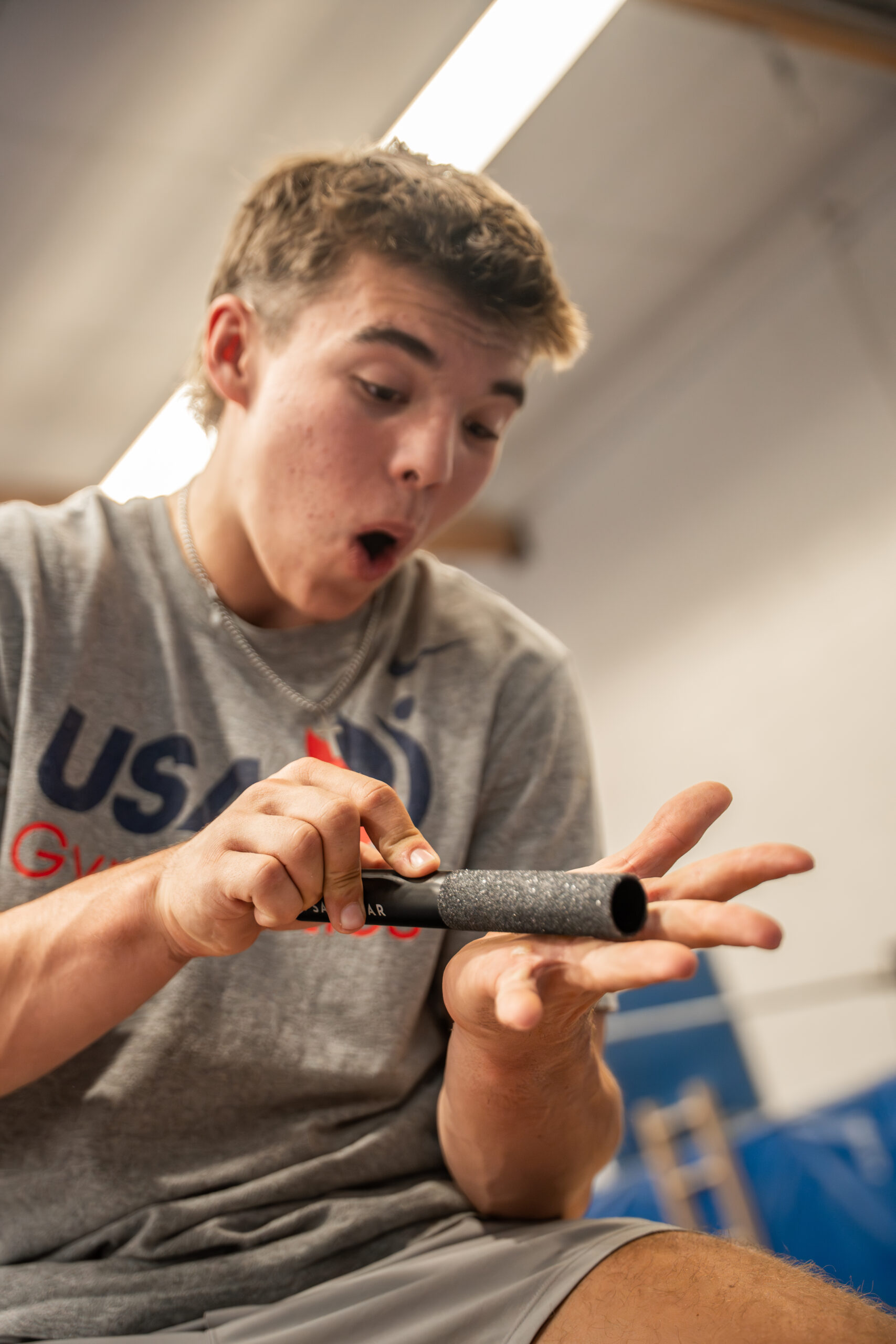
Instead of flattening them while opening my hand, which didn’t suit the way my hand naturally interacted with a bar, I needed a tool that mirrored the bar’s shape. This would allow me to return my hand to its gripping position and smooth out the areas where callus buildup occurred.
This realization led to the design of the SandBar. My goal was not to eliminate my calluses, which I valued, but to prevent them from tearing off.
SandBar’s popularity in the gymnastics community
How did SandBar become popular within the gymnastics community?
Initially, I didn’t develop SandBar specifically for gymnasts. However, I began receiving inquiries from gymnasts who had discovered the product. During the company’s early days, I visited gymnastics gyms and had athletes test the product, which left me astonished by the condition of their hands. Many had severely damaged hands with large calluses and fresh injuries, yet they would promptly return to the bars to continue training.
The dedication I witnessed was striking. I only started CrossFit at 38, while these gymnasts had dedicated much of their lives to swinging on bars. They invest countless hours in training, subjecting their hands to immense stress. My respect for their commitment grew tremendously.
This dedication made me question why callus care wasn’t integrated into their training regimen. Calluses serve a crucial purpose; they provide the body’s natural defense against friction and pressure. My own experiences taught me that well-maintained calluses improved my performance, and I couldn’t fathom how these athletes managed to train with fresh injuries.
This realization drew me closer to the gymnastics community. These athletes work diligently to prepare their bodies for the sport’s demands, and their hands deserve equal attention.
Evolution and achievements of SandBar Callus Care
What changes has SandBar Callus Care undergone since its inception, and what notable achievements have been reached?
Reflecting on SandBar’s evolution, I am often amazed at how far we’ve come. My initial prototype was simply a crooked piece of conduit I cut with a hacksaw. I never intended to launch a business; I was just frustrated with my hand injuries and determined to find a solution.
At the outset, I handcrafted every SandBar, from cutting to applying grit and packaging. There was a time when my fingerprints were nearly gone due to constant grit work. As the business expanded, we transitioned into manufacturing, evolving the SandBar from steel to aluminum, and finally to anodized aluminum with various colors and designs. The core concept has remained unchanged, though—I continue to enhance it.
My understanding of callus skin has significantly deepened. I became passionate about learning how it functions, why it tears, and what is needed to maintain its health. I quickly realized that simply filing was insufficient. The skin also requires conditioning and recovery from the stresses it endures, which inspired the creation of our Recovery Salve. I started to view callus care as an integral part of an athlete’s routine, just like other aspects of body care.
Additionally, I aimed to make callus care appealing. It doesn’t have to be dull or unattractive; I believed it could be enjoyable, which led to the vibrant colors and designs we offer.
The most significant milestone for me has been recognizing that this small solution I developed for my own issues has also benefited countless others. I still personally package and fulfill every order, and I feel a surge of excitement when athletes share how SandBar has improved their hand care. Hearing from athletes across various levels never gets old. Creating something that addresses a genuine need and allows people to continue doing what they love is invaluable.
This passion fuels my drive. I am not interested in producing items for the sake of it. Each product I release must have a purpose and address a real challenge.
The importance of callus care for gymnasts
Why is effective callus care particularly crucial for gymnasts, especially those who dedicate extensive time to bar training?
Gymnasts place significant demands on their hands. Consider the hours they spend on bars, repeatedly subjecting their hands to friction, pressure, and force. Their calluses exist for a purpose; they are the body’s response to these demands and are intended to protect the underlying skin.
The issue does not lie in having calluses; rather, it arises when they are neglected. As callused skin thickens, these areas become susceptible to tearing. This leads to a repetitive cycle: buildup, tearing, healing, and then more buildup and tearing.
I view callus care in the same light as caring for the rest of the body. Just as we don’t postpone recovery and maintenance until a problem arises, our hands deserve the same proactive approach.
If you learn to collaborate with your calluses instead of battling them, they will serve you as intended. Regular maintenance, skin conditioning, and some care will lead to healthier hands.
This philosophy encapsulates proactive callus care: stay ahead of potential issues instead of reacting to injuries as they occur.
Influence of callus maintenance on performance
In what ways can the upkeep of healthy calluses and the prevention of tears influence a gymnast’s training, consistency, and overall performance?
I won’t claim to speak on behalf of gymnasts or their coaches, given that my training began at 38 as a midlife crisis hobby. However, I can share how maintaining my calluses benefited me.
Before I learned effective care techniques, my hands were a constant concern. I would wonder if they would tear during a workout or hold up through a competition. Once I grasped how to maintain my calluses, I no longer worried about them; I had done the necessary work to ensure they were ready.
I refer to it as a form of grip insurance. While you can’t control every variable when on a bar, you can prepare your hands to the best of your ability.
Moreover, I took pride in my calluses; they represented my capabilities. However, shaking hands often drew negative reactions due to their rough condition, which was disheartening. While I appreciated my calluses, I didn’t want others to suffer because of them.
Once I mastered callus maintenance, I found a balance: I could retain the calluses I valued for their protection without having damaged hands. Calluses can indeed be aesthetically pleasing.
Insights from working with gymnasts
What insights have you gained from working with gymnasts regarding common hand-care struggles during rigorous training and competitions?
The most significant lesson is that there is a lack of education surrounding callus care. It’s not that gymnasts are indifferent to their hand health or that coaches aren’t trying to assist; rather, there hasn’t been a consistent, clear guide on how to care for their hands.
I witnessed this firsthand at the USA Gymnastics Congress in Arizona this year. I spoke with coaches and gym owners who highlighted ripping as a major issue in their gyms. They expressed, “We tell our gymnasts they need to take care of their hands.” When I inquired about the specifics of that care, their responses often became vague.
I also encountered various hand-care advice passed down through generations of gymnasts and coaches. Some of it was reasonable, while other pieces left me confused. Many old wives’ tales about hand care exist, and I question the wisdom behind some of those suggestions.
This lack of clarity is perhaps the most significant challenge. We can’t simply instruct gymnasts to take care of their hands; we must teach them how to do so.
Furthermore, it needs to be straightforward. Gymnasts spend countless hours in the gym, and by the time they return home, they are often exhausted. The last thing they need is another task to research. These athletes are incredibly disciplined; provide them with a method, instruction, and they will follow through. They just need guidance.
That’s a core objective of SandBar: eliminate the uncertainty of callus care. Focus on managing excess buildup, conditioning the skin, and maintaining consistency, rather than waiting for a tear and applying tape as a temporary fix.
SandBar is not a product I hastily created one day; I have spent years researching callus skin, refining our offerings, and observing their use by grip athletes across various sports. There’s a systematic approach to our practices: maintain the callus, preserve its protective qualities, condition the skin, and ensure consistency.
I believe there is a great opportunity within gymnastics to integrate callus care into the overall routine, shifting it from an afterthought to a standard practice.
Memorable examples of SandBar’s impact
Can you provide any memorable examples of how SandBar Callus Care has assisted individual gymnasts in maintaining their health, overcoming challenges, or building confidence in their preparations?
One gymnast who stands out is Myla Ruck. She possesses a remarkable spirit, and during our conversation, she shared her struggles with severe rips on bars and how her mother sought solutions to help her.
As a mother of three daughters, I immediately resonated with that. When your child is suffering, the instinct is to find a remedy. Witnessing their pain while feeling helpless is challenging. Therefore, hearing about the positive impact SandBar had on Myla was meaningful to me, but I was equally moved by its significance to her mother.
This sentiment is what I experience every time someone tells me SandBar has made a difference for them. The athlete’s level of achievement or skill does not matter to me. While I feel honored when elite athletes use my product, my motivation stems from my desire to solve a problem.
I still handle order fulfillment personally, witnessing the names of gymnasts who order our products. I see them tagging SandBar in their social media stories, along with parents, coaches, and athletes sharing their experiences. Occasionally, I marvel at the reality of this success.
Whether it’s a seasoned gymnast or someone just beginning their journey, if SandBar can help them minimize the time spent addressing painful injuries and maximize their time doing what they love, that holds immense value for me.
And that brings me great joy.
Future vision for SandBar Callus Care
Looking ahead, what is your vision for SandBar Callus Care, and how do you hope it will continue to benefit the gymnastics community?
My primary aspiration is to shift the perspective that ripping is an unavoidable part of gymnastics. I won’t claim that proper callus care will eliminate all occurrences of ripping; too many factors come into play, especially in a sport that demands so much from the hands. However, based on my experiences and what I have observed over time, proactive callus care can significantly alter outcomes.
I have heard remarkable stories from gymnasts regarding their severe injuries and the challenges they have faced, some of which astound me. These athletes are exceptionally resilient, but just because they can endure hardships doesn’t mean we shouldn’t take every possible step to prevent injuries in the first place.
This is the change I seek.
I want callus care to be a standard practice in gymnastics—something to be integrated into routines rather than a concern that arises only after serious injuries occur. It should be part of training, recovery, and overall body care.
I wish for young gymnasts to recognize that their calluses are allies, not foes. Their bodies develop these calluses for a reason; they should be maintained, conditioned, and cherished. Allow them to fulfill their protective role.
If SandBar can equip gymnasts with the tools and knowledge to achieve this, then we are fulfilling my original vision.
I aim to eliminate the chaos surrounding callus care.
Ultimately, if a young gymnast someday considers callus maintenance as routine as using grips or chalking up before hitting the bars, I will feel that SandBar has accomplished something truly extraordinary.